|
S |
M |
T |
W |
T |
F |
S |
|
|
|
|
1
|
2
|
3
|
4
|
|
5
|
6
|
7
|
8
|
9
|
10
|
11
|
|
12
|
13
|
14
|
15
|
16
|
17
|
18
|
|
19
|
20
|
21
|
22
|
23
|
24
|
25
|
|
26
|
27
|
28
|
29
|
30
|
31
|
|
|
|
6 members (Ted Schefelbein, Der Ami, Carcano, Jtplumb, SKB, 1 invisible),
2,459
guests, and
5
robots. |
|
Key:
Admin,
Global Mod,
Mod
|
|
|
Forums10
Topics40,241
Posts572,389
Members14,686
| |
Most Online32,084 Jun 14th, 2026
|
|
|
|
Joined: Dec 2004
Posts: 386
Member
|
OP
Member
Joined: Dec 2004
Posts: 386 |
Has anyone had any success on damascus bbls using a commercially available solution? If so, did you just follow the instructions or did you have to develop your own process? The published formulae often include mercury compounds and those are not available in many states.
doublegunhq.com Fine English, American and German Double Shotguns and Rifles
|
|
|
|
|
Joined: Feb 2003
Posts: 1,681 Likes: 27
Sidelock
|
Sidelock
Joined: Feb 2003
Posts: 1,681 Likes: 27 |
It seems to not get the requisite contrast of color between the iron and the carbon steel;I think you will have to etch. Other systems just don't seem to get there.
Last edited by gil russell; 11/23/06 04:25 PM.
[IMG]
|
|
|
|
|
Joined: Jan 2002
Posts: 707 Likes: 1
Member
|
Member
Joined: Jan 2002
Posts: 707 Likes: 1 |
Etching is not a problem to be Hg-free. Oscar's etchant was/is ferric chloride (and Parker used sulfuric acid).
Others have stated good experience with commercial (Hg-free) solutions. I haven't tried one so I'll leave it up to someone who has to recommend it.
Fred
|
|
|
|
|
Joined: Jan 2002
Posts: 461
Member
|
Member
Joined: Jan 2002
Posts: 461 |
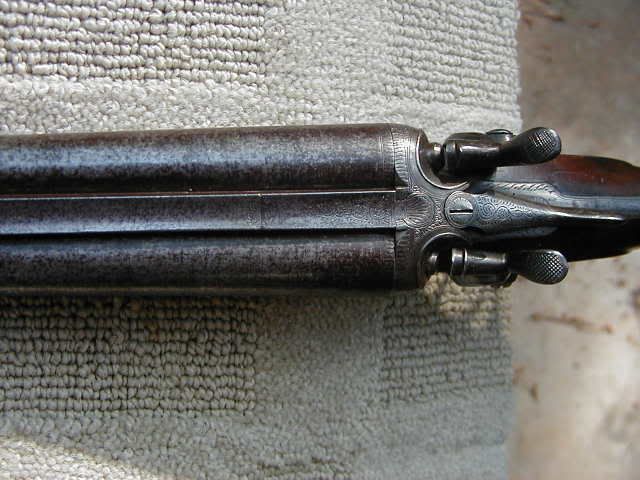
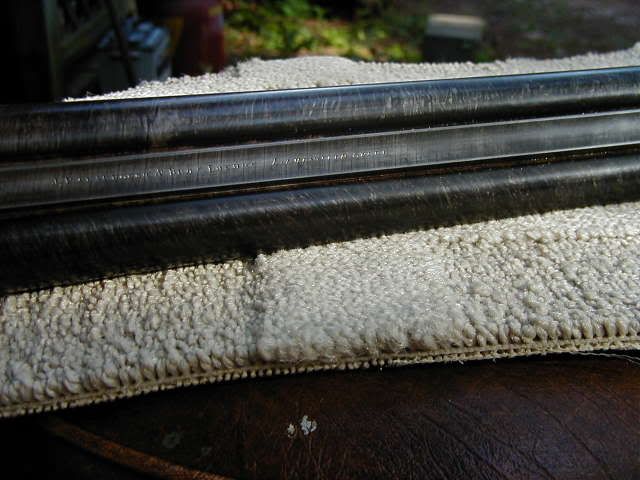
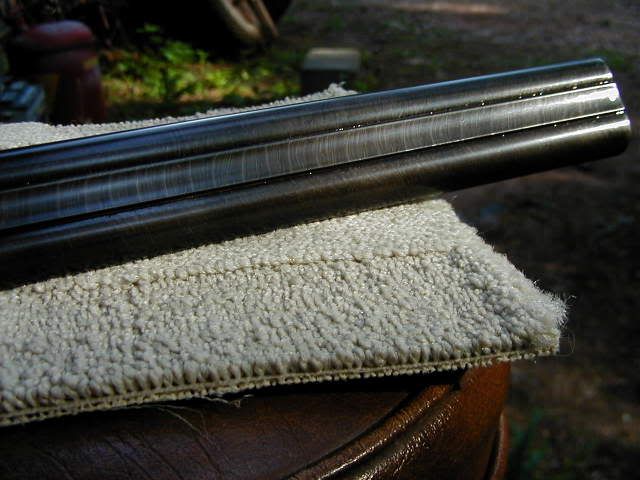
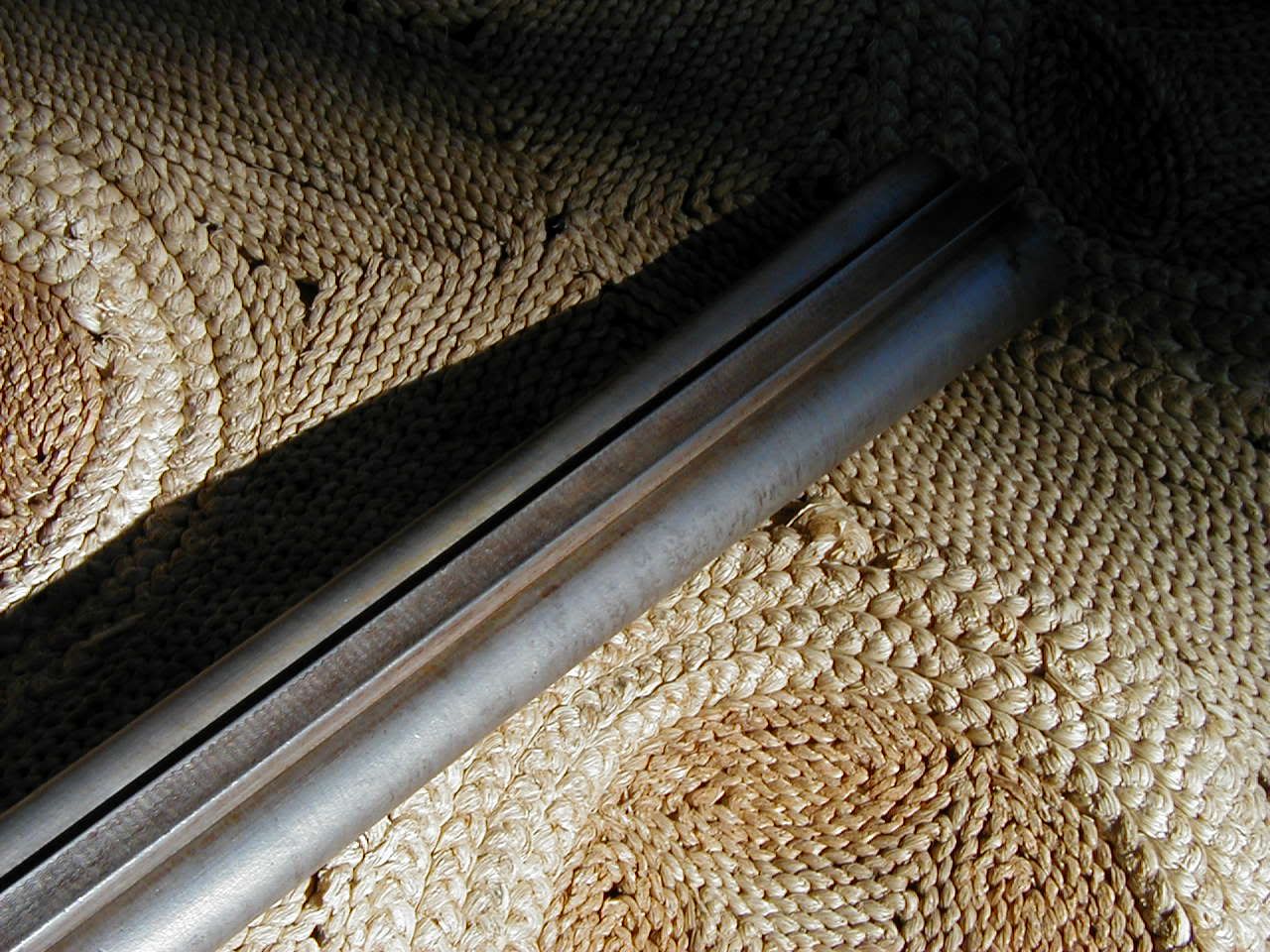
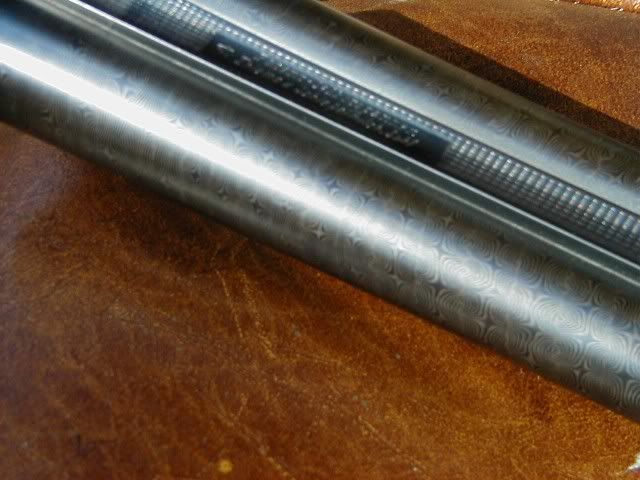
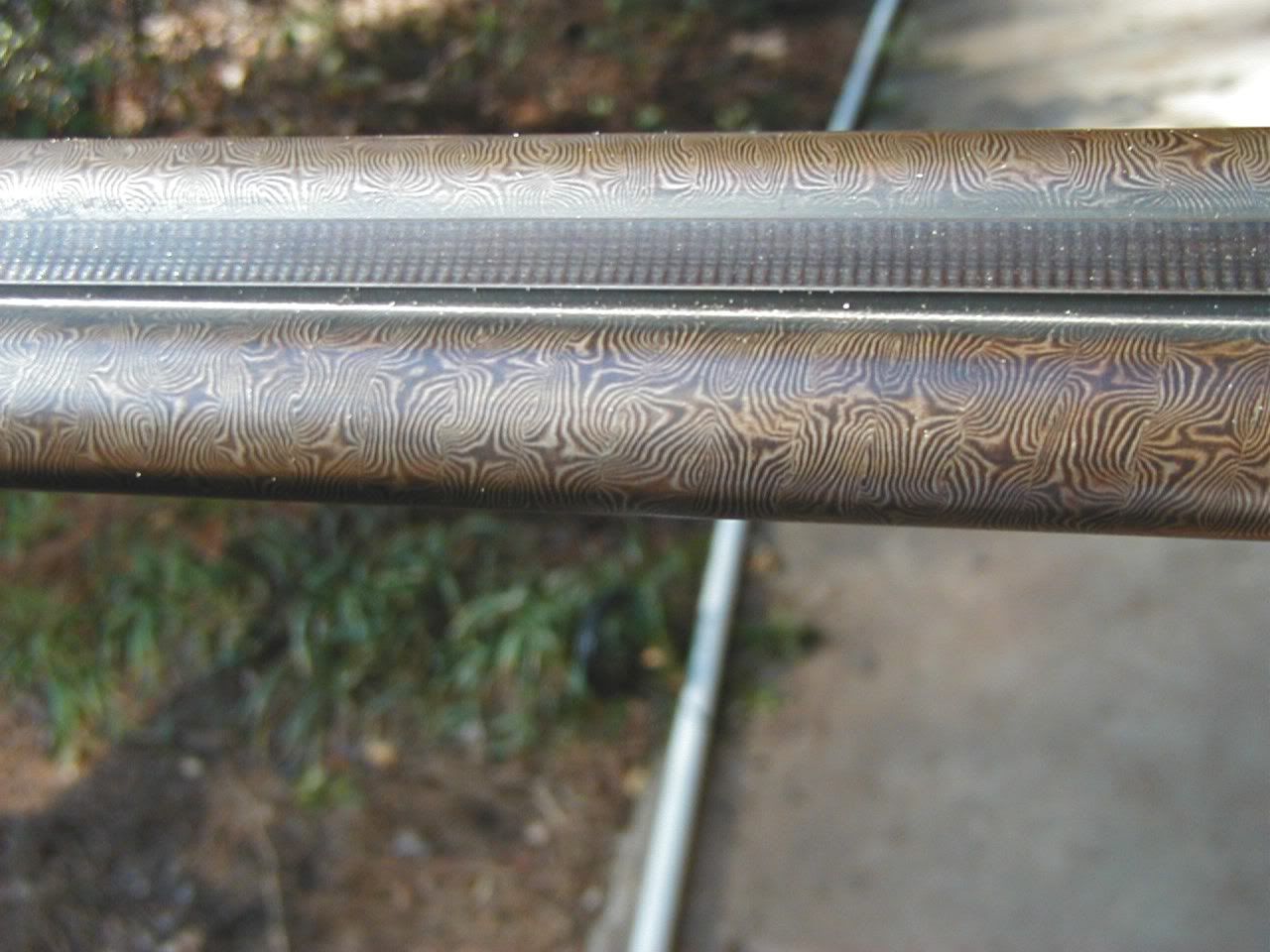
doublegunhq I am using a commertial solution "Classic American rust bluing" from Brownelle and Oscar G.instruction. Here is some pictures of before and after. and after And another one Bfore and after Casey
|
|
|
|
|
Joined: Dec 2004
Posts: 386
Member
|
OP
Member
Joined: Dec 2004
Posts: 386 |
Nothing wrong with that stuff or your process, Casey!
Thanks,
doublegunhq.com Fine English, American and German Double Shotguns and Rifles
|
|
|
|
|
Joined: Jan 2002
Posts: 2,038
Sidelock
|
Sidelock
Joined: Jan 2002
Posts: 2,038 |
Casey, that looks fantastic! I have a couple of barrels I need to do and this looks like the right way.
|
|
|
|
|
Joined: Sep 2003
Posts: 1,231
Member
|
Member
Joined: Sep 2003
Posts: 1,231 |
Have used Birchwood Casey's Plumb Brown on a Lefever H grade twist that had turned brown to cover sections where I had silvered the metal removing dents. This required heating the barrels and multiple treatments. This ultimately resulted in a good blend in. Feel doing an entire barrel set would lose too much definition.
|
|
|
|
|
Joined: Nov 2005
Posts: 4,598
Sidelock
|
Sidelock
Joined: Nov 2005
Posts: 4,598 |
Casey,
When tips did Oscar give about doing this?
|
|
|
|
|
Joined: Jan 2002
Posts: 461
Member
|
Member
Joined: Jan 2002
Posts: 461 |
Pete,,, Oscar did write a good artical how to do a damascus finish in DGJ. Thi was my first try. I do a lot of Rust bluing so I have most of the equipment neeed to do this. Dave,,, I have 6 or 7 more do do of my own, all I need is time. Casey
|
|
|
|
|
Joined: Dec 2004
Posts: 386
Member
|
OP
Member
Joined: Dec 2004
Posts: 386 |
WW Greener describes the process in much simpler terms. Simply rust, card, repeat til "dark enough", each time rusting in a warmer room, then boil in water with logwood and "soda" (presumably sodium bicarb or perhaps caustic), OR logwood and copper sulphate. Greener also advocates "Burnishing" before if you want the best finish...Oscar says it's a waste of time (of course it is if you then etch the surface).
Oscar's process seems very complicated. He introduces several additional baths (etching bath, and the copperas bath as well...)
I don't like the etch idea at all. I see Parker used sulphuric etch, perhaps Parker damascus requires this due to the specific alloys used. The copperas in Oscar's recipe introduces the sulphate ions, so perhaps this is the equivalent of Greener adding copper sulphate, as there are already plenty of FE ions in the bath from the barrel steel and iron.
Etching probably has two effects. The first is to roughen up the bare metal, maybe it makes the steel portion more likely to rust because it etches more than the iron in the same time. It also raises the iron relative to the steel, protecting the steel from the carding somewhat. I would think that it has the same effect on the rust itself, rust is rust. And it surely makes the whole process longer by removing some of the rust coating.
The reaction (dissolving metal) probably goes a little quicker when the solution is warm, ie in warmer climates.
And I suspect that to get the really nice "copal varnish" finish Greener talks about, you have to polish the metal well, certainly more than 320 grit, and skip the etching altogether.
Anyone care to comment?
doublegunhq.com Fine English, American and German Double Shotguns and Rifles
|
|
|
|
|