|
S |
M |
T |
W |
T |
F |
S |
|
1
|
2
|
3
|
4
|
5
|
6
|
7
|
|
8
|
9
|
10
|
11
|
12
|
13
|
14
|
|
15
|
16
|
17
|
18
|
19
|
20
|
21
|
|
22
|
23
|
24
|
25
|
26
|
27
|
28
|
|
29
|
30
|
31
|
|
|
|
|
|
|
6 members (NTaxiarchis, Ted Schefelbein, Ducks Rx, Marks_21, Hammergun, 1 invisible),
1,059
guests, and
3
robots. |
|
Key:
Admin,
Global Mod,
Mod
|
|
|
Forums10
Topics39,876
Posts567,890
Members14,638
| |
Most Online9,918 Jul 28th, 2025
|
|
|
|
Joined: Oct 2008
Posts: 42
Sidelock
|
OP
Sidelock
Joined: Oct 2008
Posts: 42 |
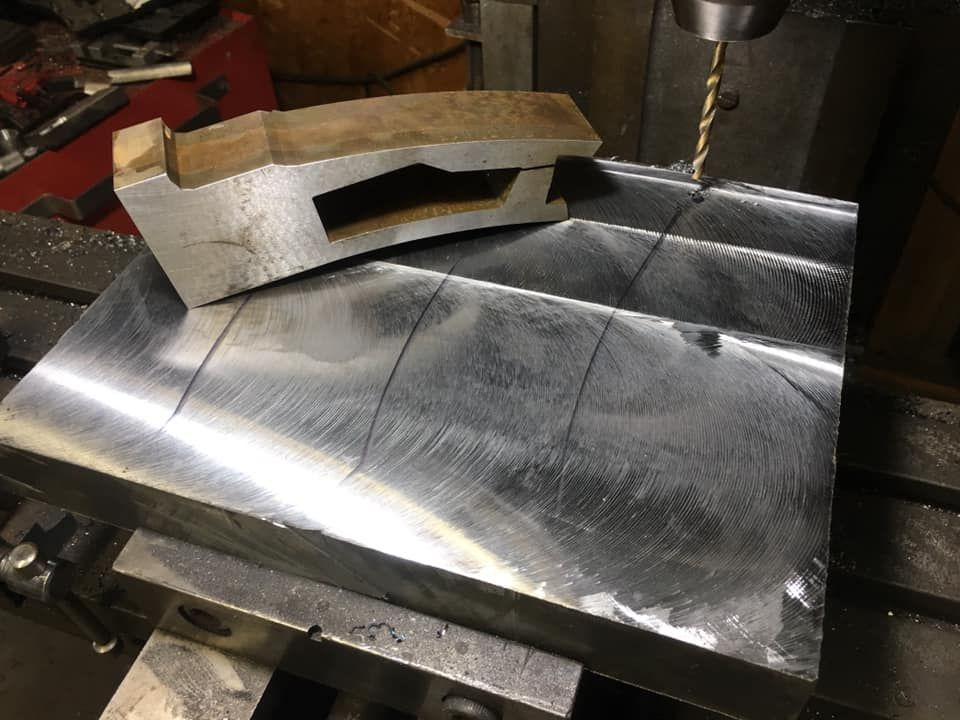
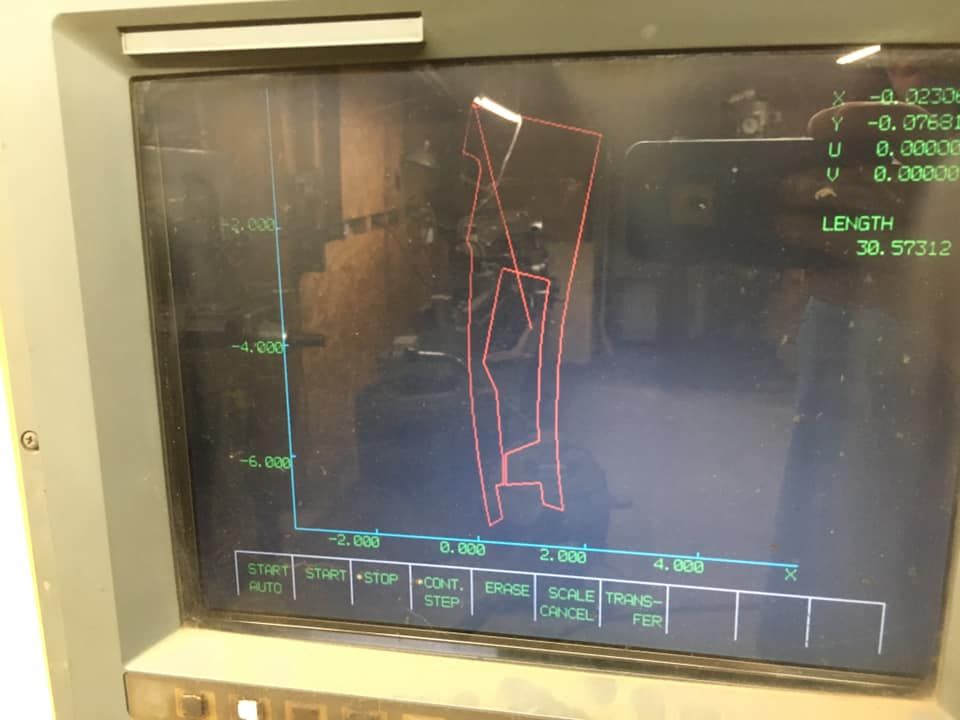
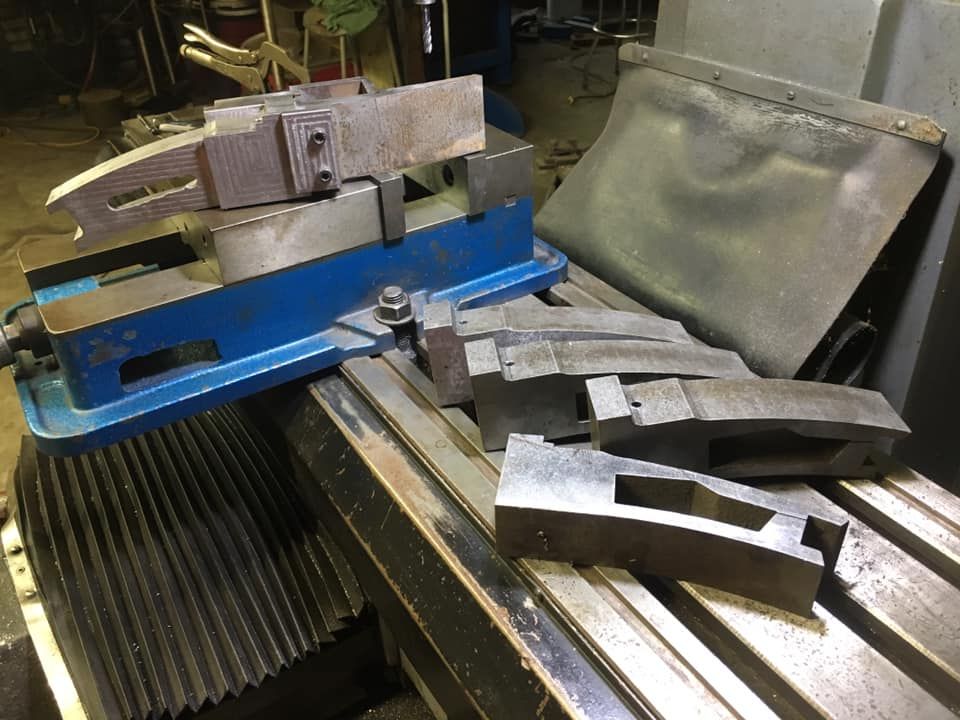
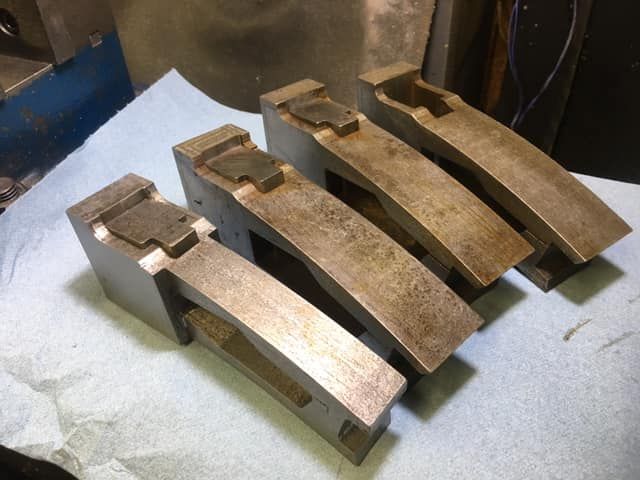
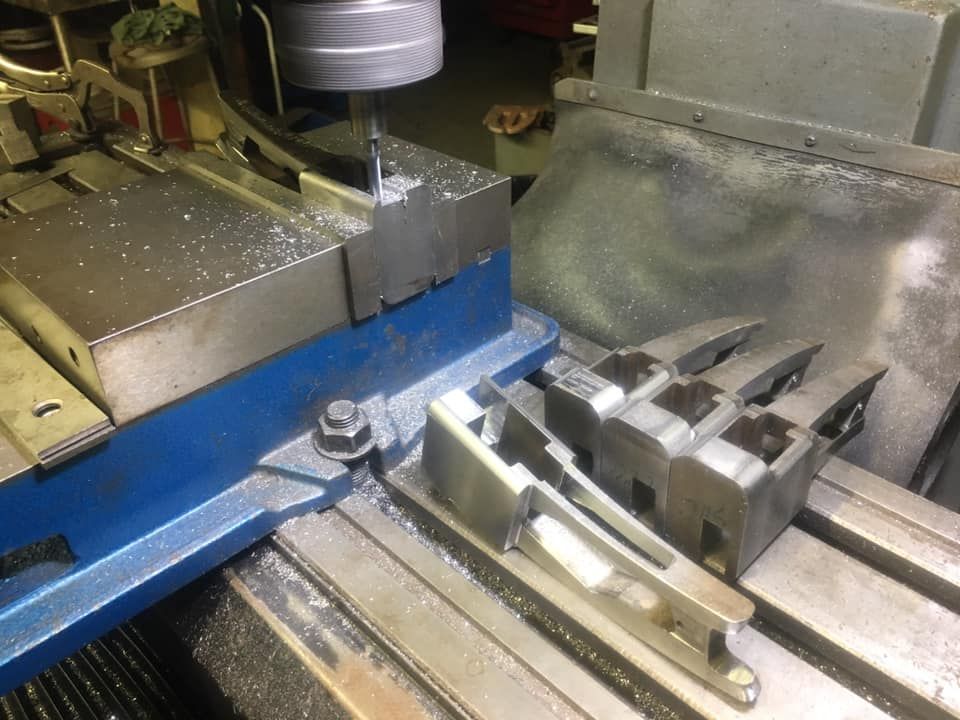
Building the first run of sidelever falling block actions, I've documented the process so far. The first step obviously is to extract the action from the plate of 8620 steel in which it is contained. I am fortunate to have a wire EDM in house. While it is capable of far greater accuracy than is required for simply profiling the action, precision is never wasted.   Once the batch of action bodies are all profiled, holes are drilled to located the starting point for the wire path to cut the breech block cavity, and a fixture is made to hole the actions during the cut.  Breech blocks were wire cut before I started on the actions. The fit is extremely precise with .001" clearance for movement. Wire EDM is a very slow process and it's done under a powerful flush of water to cool the wire and clear eroded metal from the cut.  The tang surfaces are machined with tapers in both horizontal and vertical axis. There are also flats left on the interior edges of the tangs to index onto the inletting of the stock to negate any movement of the action once it's seated. Actions are secured to the stock with a drawbolt. From there the pockets for the trigger group, cocking lever and extractor are machined. Also the hole in the side of the action for the sidelever stem.  Actions are flipped over and the cartridge trough is machined in. A mock assembly of the sidelever, breech block and trigger group housing ( also made before the action bodies were started) is hard to resist.
|
|
|
|
|
Joined: Oct 2008
Posts: 42
Sidelock
|
OP
Sidelock
Joined: Oct 2008
Posts: 42 |
|
|
|
|
|
Joined: Jan 2004
Posts: 7,733 Likes: 697
Sidelock
|
Sidelock
Joined: Jan 2004
Posts: 7,733 Likes: 697 |
I don't know what these will look like in the end, but they sure look interesting now! I love the independent trigger group.
The tangs look unnecessarily thick and heavy. Will they be thinned down in final form?
What sorts of chamberings are appropriate for these?
Any completed rifles to look at?
_________ BrentD, (Professor - just for Stan) =>/
|
|
|
|
|
Joined: Jun 2008
Posts: 5,696 Likes: 226
Sidelock
|
Sidelock
Joined: Jun 2008
Posts: 5,696 Likes: 226 |
WOW! Great thread You are talented Thank you for sharing Mike
USAF RET 1971-95
|
|
|
|
|
Joined: Oct 2008
Posts: 42
Sidelock
|
OP
Sidelock
Joined: Oct 2008
Posts: 42 |
I don't know what these will look like in the end, but they sure look interesting now! I love the independent trigger group.
The tangs look unnecessarily thick and heavy. Will they be thinned down in final form?
What sorts of chamberings are appropriate for these?
Any completed rifles to look at? Brent, The top tang is left a little thicker towards the rear because it will house part of the safety mechanism, so it will be largely hollow. These actions are also made to be a bit smaller than most falling blocks. 2.25" tall. They have plenty of steel where it is needed though. They can be chambered up to 9.3x74R or .405 Win.
|
|
|
|
|
Joined: Oct 2008
Posts: 42
Sidelock
|
OP
Sidelock
Joined: Oct 2008
Posts: 42 |
Set in another fixture dedicated to the machining of the face of the action and associated steps. A 2" deep hole is drilled at the center of the hole for the barrel. This establishes the center of the bore and the center of the pocket for the striker and that the two are perfectly aligned.  The face of the action is trued to ensure it is perfectly perpendicular to the bore. This is where the barrel seats and is a very important step to ensure accuracy. Not unlike facing the end of a bolt rifle action.  Now the hole for the barrel can be machined. The breech block is in the action during this setup, so the bottom of the barrel hole will form the face for the breech block in a very precise manner. Not only will it be perpendicular, it is also machined to a known depth allowing the machining of the barrel shank to be done to the exact length. The breech block is tilted forward 3 degrees, so accurately cutting the breech block face any other way would be far more time consuming and wouldn't yield the precision this setup offers. Also, the picture below shows the location of the center of the bore is well below the top edge of the breech block pocket. This allows the full diameter of the chamber, and case thrust for firing, are fully supported in the action. Even though the breech block extends to the bottom of the action, this helps prevent the case thrust from torquing the breech block and further localizing the area of the action that would absorb the case thrust. Having the camber area fully supported keeps the distribution of the case thrust over a much more broad area. 
|
|
|
|
|
Joined: Oct 2008
Posts: 42
Sidelock
|
OP
Sidelock
Joined: Oct 2008
Posts: 42 |
With the barrel hole machined, the threads can be machined with a thread mill. Precision threads cut in perfect alignment with the hole, the action face and breech block face.  The finished barrel shank hole and threads 
|
|
|
|
|
Joined: Feb 2008
Posts: 11,966 Likes: 810
Sidelock
|
Sidelock
Joined: Feb 2008
Posts: 11,966 Likes: 810 |
Great thread Baily. Is this an action you designed from scratch, or an adaptation of an existing design? I really enjoyed the thread you posted some years ago with your redesigned Farquharson action. I can't wait to see how these actions and rifles turn out. Very interesting seeing details of the build. Thanks for sharing it with us.
Voting for anti-gun Democrats is dumber than giving treats to a dog that shits on a Persian Rug
|
|
|
|
|
Joined: Oct 2008
Posts: 42
Sidelock
|
OP
Sidelock
Joined: Oct 2008
Posts: 42 |
Great thread Baily. Is this an action you designed from scratch, or an adaptation of an existing design? I really enjoyed the thread you posted some years ago with your redesigned Farquharson action. I can't wait to see how these actions and rifles turn out. Very interesting seeing details of the build. Thanks for sharing it with us. I did design this action, but as form follows function, there are older designs that are similar. It's a striker fired action, so it has similar parts other striker fired designs. My website has more pictures of the prototype and a thorough description of the action. http://www.bradshawgunandrifle.com/sidelever-falling-block.html
|
|
|
|
|
Joined: Oct 2008
Posts: 42
Sidelock
|
OP
Sidelock
Joined: Oct 2008
Posts: 42 |
trigger group housings. First profiled out of 1/2" plate, holes spotted for the pivot points of the trigger and sear, and a window that displays the trigger/ sear engagement.  The housings are then surface ground to final thickness, slotted to accept internal parts, holes drilled and reamed, and the parts are deburred. . 
|
|
|
|
|